


Is Early-Life Exposure to Environmental Pollution Associated With Poverty in Adulthood?

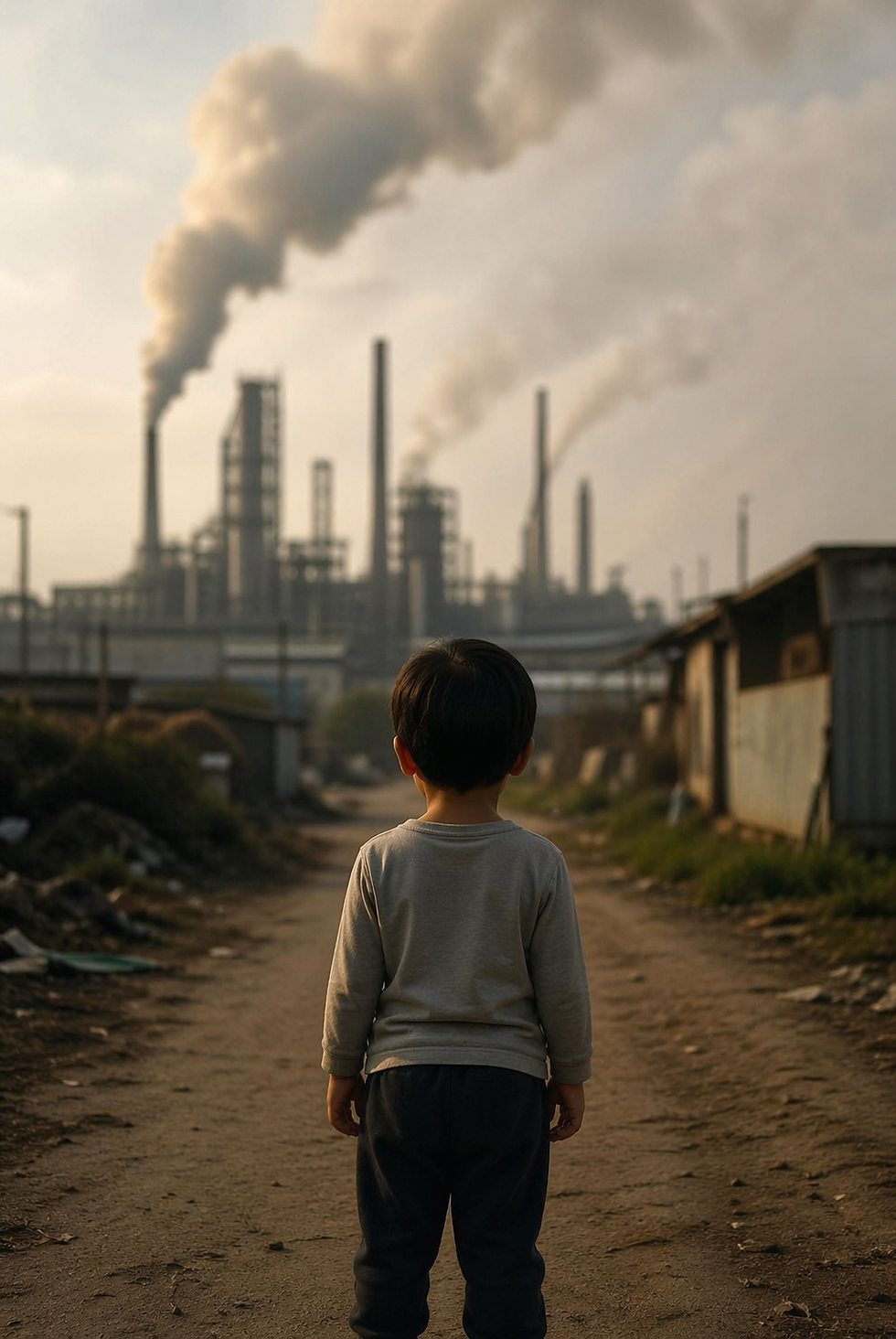
Persico (2026) asks whether prenatal exposure to industrial pollution causes worse long-term economic, educational, and health outcomes. She uses geocoded longitudinal data from the Children of the National Longitudinal Survey of Youth (NLSY79), comparing siblings exposed in utero to pollution from nearby Toxic Release Inventory sites with unexposed siblings . She finds large negative effects: exposed children have about 23% lower wages, 0.76 fewer years of education, and are 12.7 percentage points more likely to receive public assistance as adults. Overall outcomes decline by roughly 0.41 to 0.57 standard deviations, indicating substantial long-run harm.
Why This Article Was Selected for The Policy Scientist
This article addresses a central policy question: whether environmental conditions early in life shape long-run economic mobility and inequality. That question has become increasingly salient as attention has shifted from short-term pollution effects to intergenerational outcomes. Persico (2026) contributes meaningfully to this shift, extending a research agenda she has developed in prior work on pollution and human capital. The use of longitudinal, geocoded sibling data is a clear strength, offering credible causal inference through within-family comparisons and quasi-experimental variation from plant openings and closings. While not an RCT, the design is rigorous. The findings likely generalize to similar industrial contexts, though external validity may vary with regulatory environments and pollutant composition.
Full Citation and Link to Article
Persico, C. (2026). Can pollution cause poverty? The effects of pollution on educational, health, and economic outcomes. Journal of Policy Analysis and Management, 45, e70091. https://doi.org/10.1002/pam.70091
Central Research QuestionThis article examines whether prenatal exposure to industrial pollution causally affects long-run human capital formation and economic outcomes. Specifically, Persico (2026) asks whether exposure in utero to emissions from Toxic Release Inventory (TRI) sites reduces educational attainment, labor market performance, and overall well-being in adulthood. The analysis is motivated by a gap in the literature: while short-term health and cognitive effects of pollution are well documented, less is known about whether these early-life exposures translate into persistent economic disadvantage. The paper therefore situates pollution not merely as an environmental or health issue, but as a potential driver of intergenerational inequality and reduced economic mobility. By focusing on gestational exposure, the study also evaluates whether critical developmental periods amplify the long-term consequences of environmental risk.
Previous LiteratureThe study builds on a substantial body of research linking early-life conditions to later-life outcomes, particularly the “fetal origins” hypothesis advanced by Almond and Currie. Prior work has established that pollution exposure can negatively affect birth outcomes, cognitive development, and test scores in childhood. A smaller subset of studies has extended this inquiry to adulthood, finding modest effects on wages, employment, and educational attainment. However, much of this literature relies on aggregate geographic variation or policy-induced changes in pollution, such as the Clean Air Act, and typically focuses on regulated pollutants like particulate matter or lead. Persico (2026) extends this literature in two important ways. First, it examines a broader class of hazardous air pollutants emitted by TRI facilities, many of which are less studied and less regulated. Second, it links early-life exposure directly to adult economic outcomes using detailed individual-level data. The paper also builds on Persico’s prior work examining pollution’s effects on child outcomes, thereby deepening an established research agenda. Relative to widely cited studies, the contribution lies in combining fine-grained exposure measurement with long-term outcome data.
DataThe analysis uses data from the Children of the National Longitudinal Survey of Youth 1979 (CNLSY79), a rich longitudinal dataset that links mothers and their children over time. This dataset provides detailed information on education, income, employment, health, and demographic characteristics into adulthood. A key strength is the ability to match siblings within the same family, enabling within-family comparisons that control for shared background characteristics. These individual-level data are combined with geocoded information on TRI site locations and timing of plant openings and closings, derived from Environmental Protection Agency records and state tax filings. Exposure is defined based on whether a child’s mother lived within one mile of an operating TRI site during gestation. The resulting dataset allows for precise measurement of both exposure timing and proximity. While the sample is necessarily restricted to families living near TRI sites, the richness of the longitudinal data and the ability to observe outcomes over decades significantly enhance internal validity. However, the geographic and institutional context—primarily the United States during a specific regulatory period—may limit full generalizability to settings with different environmental policies or industrial compositions.
MethodsThe empirical strategy is grounded in quasi-experimental causal inference techniques. The primary identification approach uses sibling fixed effects, comparing siblings within the same family who differ in prenatal exposure due to the opening or closing of nearby TRI sites. This design controls for all time-invariant family characteristics, including socioeconomic status, parental education, and neighborhood selection. To address potential residential sorting and endogenous mobility, the preferred specification assigns exposure based on the location of the first birth in the family, effectively implementing an intent-to-treat framework. In addition, the study employs a stacked difference-in-differences design at the ZIP code level, comparing cohorts conceived before and after plant openings or closings within the same geographic area. These approaches leverage plausibly exogenous variation in exposure timing, strengthening causal interpretation. While the study does not use a randomized controlled trial, the combination of within-family comparisons and event-based variation represents a rigorous application of causal inference methods. The statistical models include extensive controls and fixed effects, and standard errors are clustered at the TRI site level to account for spatial correlation.
Findings/Size EffectsThe results indicate substantial and persistent negative effects of prenatal pollution exposure on long-run outcomes. In the preferred specification, exposure to an operating TRI site during gestation reduces a composite index of adult outcomes by approximately 0.41 to 0.57 standard deviations. This index aggregates measures of income, education, employment, and disability. Disaggregated results reveal that exposed individuals earn approximately 23 percent lower wages, complete 0.76 fewer years of education, and are 12.7 percentage points more likely to receive public assistance in adulthood. In specifications restricted to non-moving families, the estimated effects are even larger, with wage reductions approaching 30 percent and education losses exceeding one full year. The study also documents increased rates of cognitive disability and reduced high school completion among exposed individuals. These magnitudes are notably larger than those reported in earlier studies, likely reflecting both the toxicity of TRI pollutants and the precision of the exposure measure. The findings suggest that the consequences of pollution exposure are highly localized, with individuals living closest to emission sources experiencing the largest effects. The results are robust across multiple specifications and are consistent with a mechanism in which early-life exposure impairs cognitive development, leading to reduced human capital accumulation and weaker labor market outcomes.
ConclusionThe article provides compelling evidence that prenatal exposure to industrial pollution has significant long-term consequences for economic and educational outcomes. By linking early-life environmental conditions to adult measures of well-being, the study reframes pollution as a factor in the persistence of inequality. The use of detailed longitudinal data and credible quasi-experimental methods strengthens the internal validity of the findings. At the same time, the reliance on observational data means that causal claims depend on the plausibility of the identification assumptions, though these are carefully justified and tested. The results are most directly applicable to contexts with similar industrial structures and regulatory environments, but they likely extend to other settings where hazardous emissions are concentrated near residential populations. Overall, the study represents an important contribution to the literature by demonstrating that environmental exposures can have durable effects on human capital and economic outcomes, thereby integrating environmental policy into broader discussions of social mobility and inequality.


Comments